In short
From mid September the water cools, fish feed through the middle of the day again, and the big orange October caddis appears on both rivers. Blue winged olives return on grey afternoons, brown trout become aggressive before spawning, and the first serious storm of the season is usually the moment the year changes character.
September: the turn
The change is not dramatic, it is cumulative. Nights lengthen, the canyon holds its cool longer into the morning, and by the third week of September water temperatures that had been peaking uncomfortably are back in the productive band for most of the day. Fish that had been feeding in a narrow dawn window spread that feeding across the afternoon.
Flows are at their annual low, so the water is clear and the fish are still wary. Long leaders and a careful approach continue to matter, but the fish are willing again, which they were not in August.
The October caddis
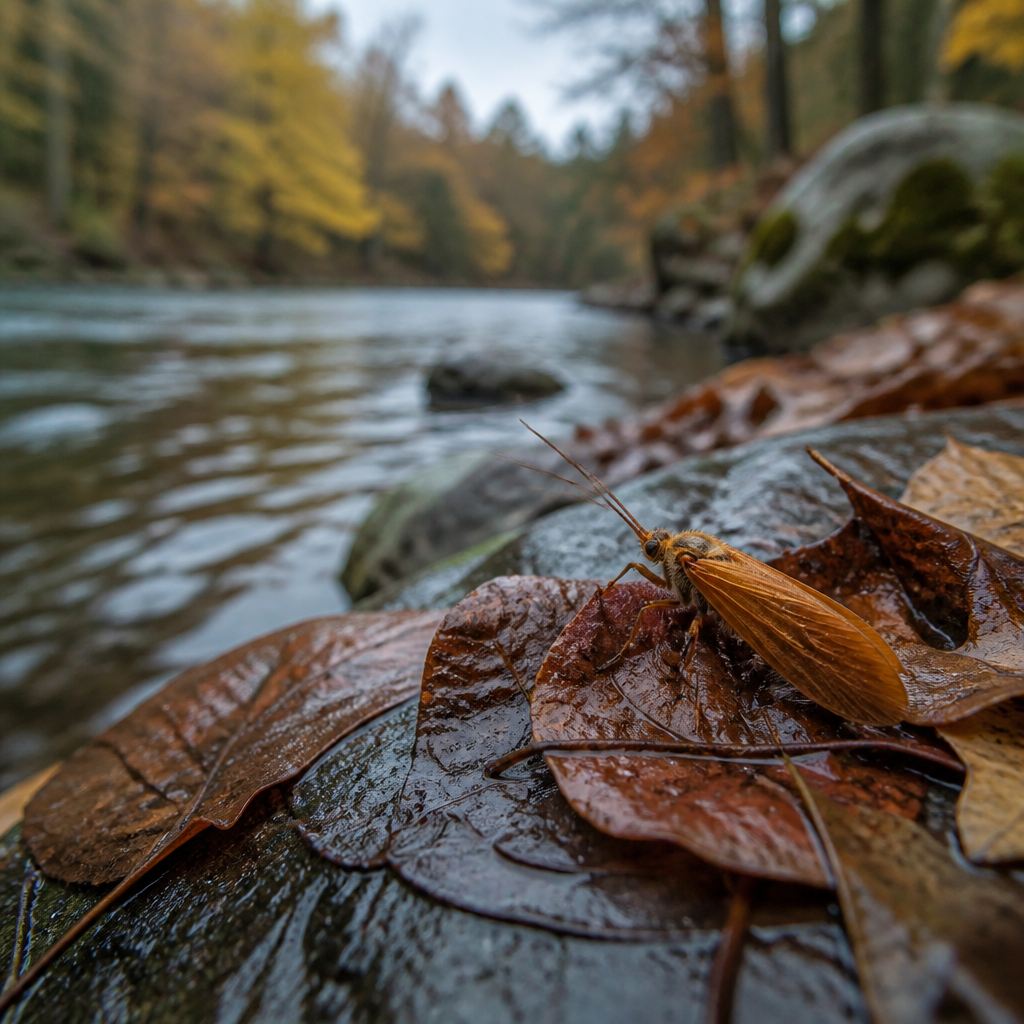
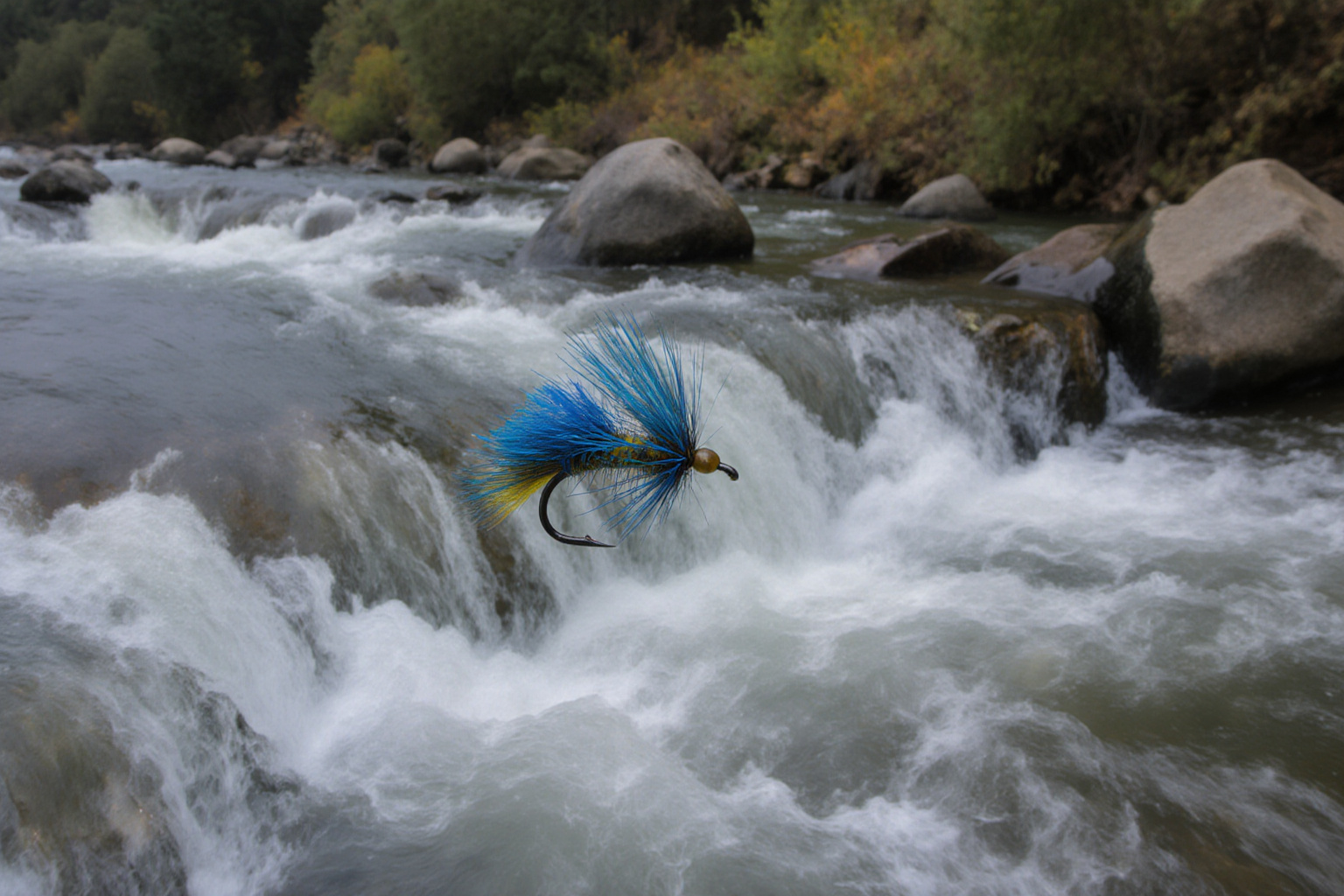
The largest insect most anglers will see on these rivers is a big orange caddis that appears from September into October, and it behaves in a way that suits an angler perfectly. The pupa crawls toward the bank to emerge rather than drifting in open water, and the egg laying adult returns to the river in the evening. That gives two productive presentations: a large orange bodied pupa imitation fished deep and swung toward the margins, and a large buoyant orange dry fly in the last hour of light.
The dry fly is worth carrying even when nothing is showing, because it is large enough to fish as a searching pattern with a nymph suspended below it, which is the single most useful summer and autumn rig on this water.
Blue winged olives come back
The other autumn event is the return of small dark mayflies on overcast days. They are size 16 to 20, they hatch in the worst weather, and they bring fish to the surface in slower water where the October caddis is irrelevant. A grey, drizzly October afternoon on a Sacramento tailout is one of the best dry fly opportunities of the year, and almost nobody is there for it. The seasonal picture is laid out in the hatch chart.
Brown trout before the spawn
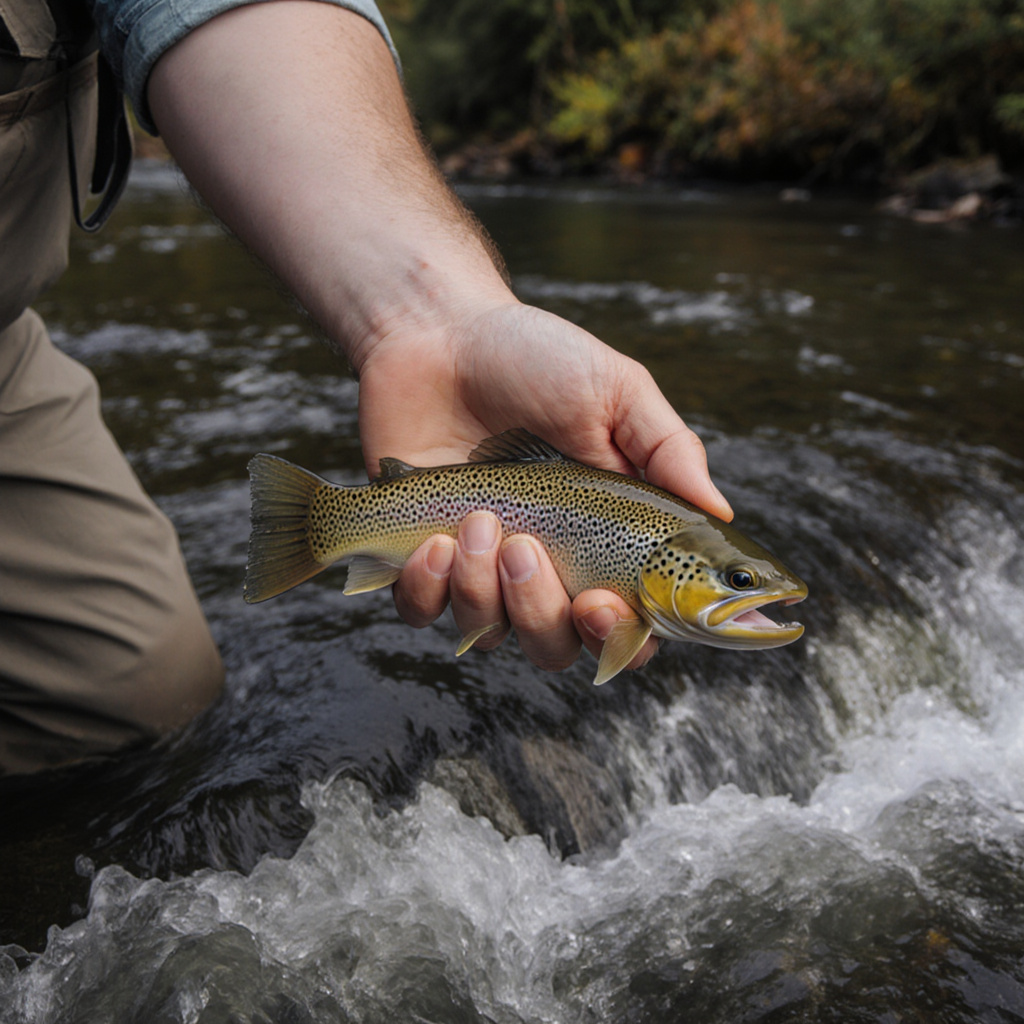
Brown trout, present in both systems and more numerous lower down, become noticeably more aggressive as autumn advances and they approach spawning. That produces the streamer fishing that autumn is known for, and it produces an obligation. Spawning fish build gravel nests, called redds, in shallow tailouts, and they are visible as pale, clean patches of gravel. Do not wade through them, and leave fish that are actively working them alone. A trout guarding a redd is easy to catch and worth nothing to catch.
The first storms
Somewhere between late October and December the first serious Pacific system arrives, and it resets everything. The Upper Sacramento colours up within hours and can take days to settle. Leaves come down and foul flies. Roads in the McCloud canyon turn greasy, and the long gravel drive becomes a different proposition.
The two or three days immediately after that first rain, once the river has begun to drop, are frequently the best fishing of the autumn: the flow refreshes the river, fish move, and the water still carries enough colour to make them careless. Reading that rise and fall is exactly the skill described in the early season page, applied in the opposite direction.
What closes, and when
Many California waters close to trout fishing in mid November, while others remain open all year, sometimes under different rules for the winter. That distinction is decided reach by reach and it is revised annually, so a plan for a late autumn trip should begin with the current regulations rather than with a memory. The regulations section explains how to look it up, and the McCloud reach page shows why a single river can have several different answers.