Hatches and flies
Hatches and fly selection on these two rivers
A fly box for this drainage does not need to be large. Four insect groups produce almost all of the surface and near surface feeding that anglers see: mayflies, caddis, stoneflies and midges. Everything else is a detail.
In short
Caddis carry the summer on both rivers, mayflies carry the shoulder seasons, stoneflies matter from May through July and again as the big orange October caddis in autumn, and midges fill the cold months. Match the group and the size before you worry about the pattern name.
The four groups, and what each one asks of you
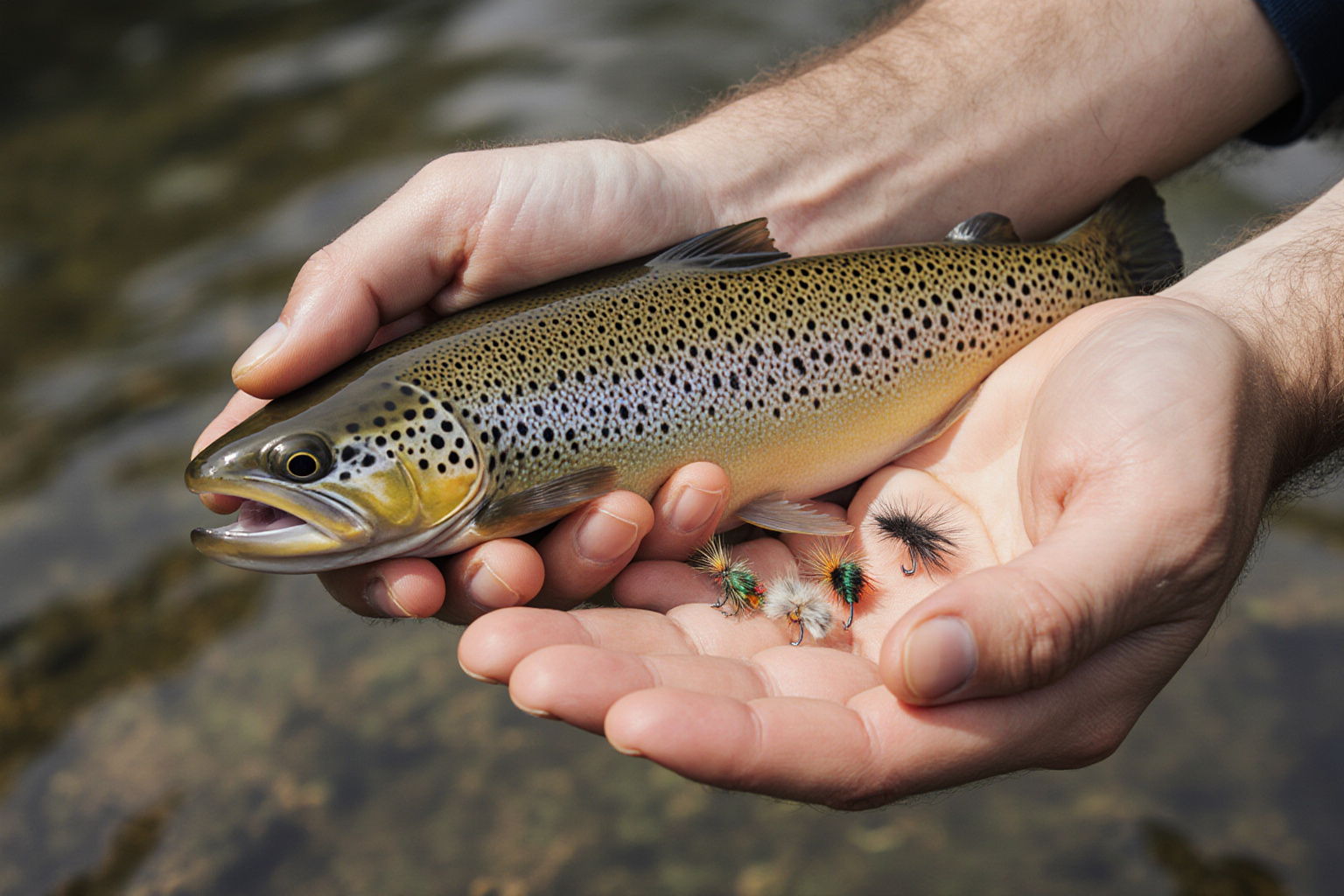
Mayflies
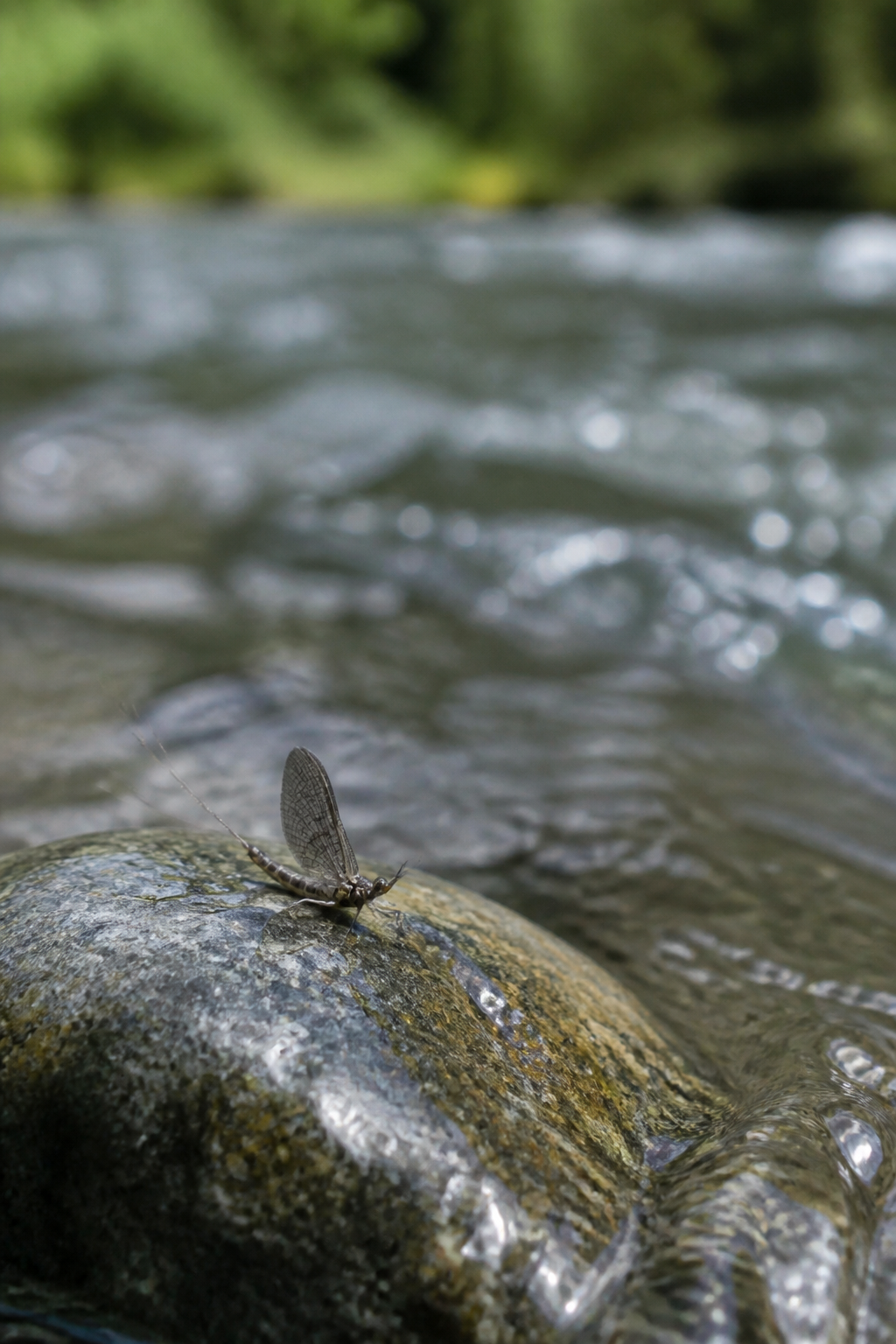
Blue winged olives, the small dark Baetis mayflies, appear on grey days in late winter and spring and again in October and November. They are small, usually hook size 16 to 20, and they hatch best when the weather is worst. March browns come earlier, from late February into April, and are noticeably larger. Pale morning duns follow from May into July on the warmer afternoons.
Caddis
Caddis are the workhorse of both rivers from April to September. The important thing about caddis on fast, broken water is that the emerging pupa and the diving egg laying adult are eaten far more often than the drifting adult, which is why a soft hackle swung across a riffle so often outfishes a dry fly during what looks like a heavy hatch.
Stoneflies
Golden stoneflies and the smaller yellow stones are present from May into July. Their nymphs live in the fast, oxygenated pocket water that both rivers are made of, and they crawl to the bank to hatch rather than emerging in open water. A large stonefly nymph is therefore a credible fly at almost any time, not only during the hatch. The giant orange October caddis, which is a caddis rather than a stonefly but is fished in much the same way, arrives in September and October.
Midges
Midges hatch every month of the year, and in the cold water of January and February they are frequently the only insect on the water. They ask for small hooks and fine tippet, which is uncomfortable in fast water and is the reason many anglers ignore them.
Using a hatch chart honestly
A hatch chart is a table of probabilities built from many seasons, not a timetable. Elevation moves dates by weeks: the same insect may hatch in the lower Sacramento canyon near Shasta Lake a fortnight before it appears above Dunsmuir, and the McCloud canyon runs on its own schedule because its water temperature barely moves. Use the chart to decide what to carry, and use the water to decide what to tie on.
The full month by month table lives on the Upper Sac hatch chart page, with sizes and the stage that actually gets eaten.
Turning that into a box
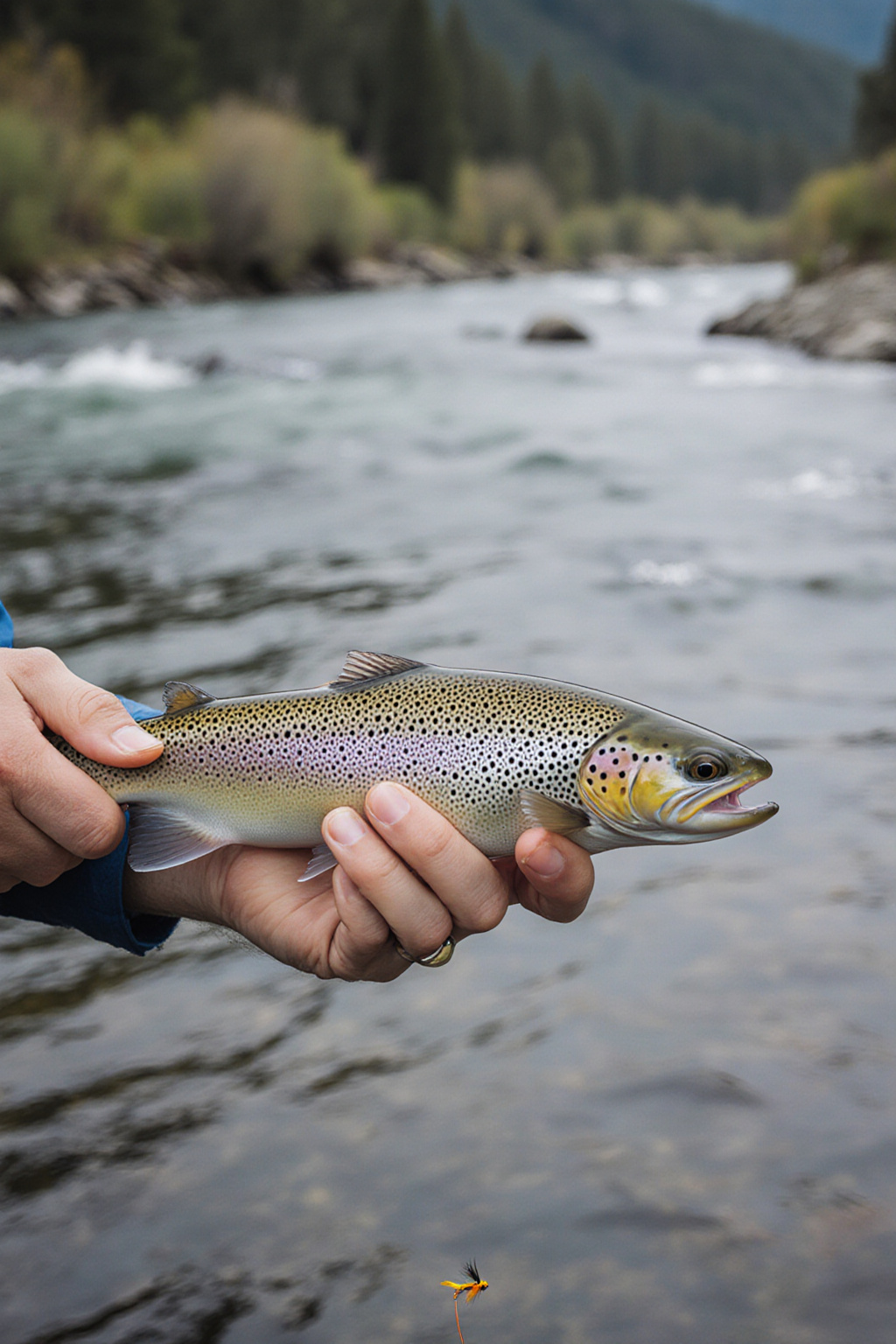
The practical version of all of the above is short. Two dozen well chosen flies in three or four sizes each will cover the year on both rivers, and the selection barely changes between them. What changes is the weight you fish them with and the depth you fish them at.
- Sink the fly first. On broken water most trout eat below the surface. Depth and drift beat pattern nine days out of ten.
- Carry sizes, not patterns. A pheasant tail in 12, 14, 16 and 18 does more work than four different nymphs in size 14.
- Keep one big attractor. A heavy stonefly nymph or a large beadhead gets a smaller fly down without split shot on the leader.
- Keep one swung fly. A soft hackle covers the emerging caddis, which is the most commonly missed opportunity on both rivers.
The page on the best flies for the McCloud River sets out a starter box of that kind and explains why each entry earns its place in a deep, cold, canyon river rather than in a general trout stream.
The two pages in this section
Insects and patterns
-
14/08/2026
Upper Sac hatch chart, month by month
Twelve rows covering mayflies, caddis, stoneflies and midges, with the stage that actually gets eaten and the sizes worth carrying.
-
09/08/2026
Best flies for the McCloud River
A two dozen fly starter box for a deep, cold canyon river, and the reasoning behind each choice.