Gear and trip planning
Riding Lessons and Trail Access Near Anduze
A practical look at riding lessons, FFE licences, and trail riding around Anduze in the Cévennes, plus how to read the signs on a marked route.
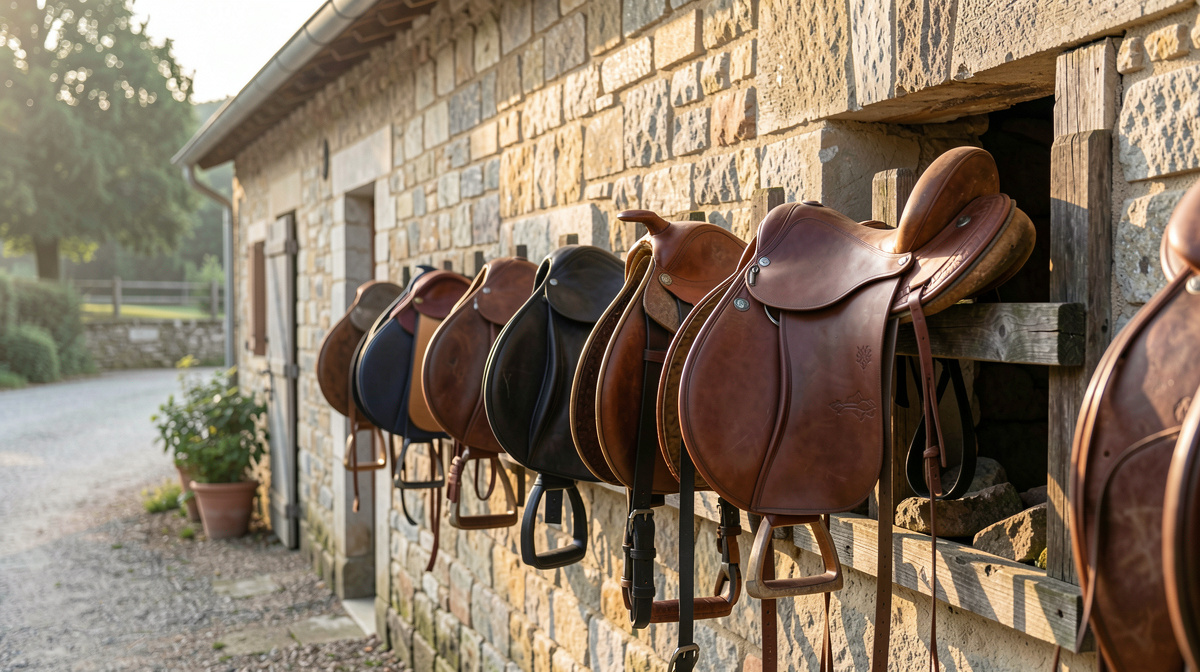
Riding around Anduze means two different things at once: weekly lessons at a local yard, and long day rides or multi day trips on the marked trails of the Cévennes. Both run on the same practical base, which is a licence or a lesson card, a horse that suits the rider, and a route that matches the season. A magazine covering riding in the Cévennes and the Gard treats those practical details as the main subject, from the weekly schedule of a yard to the colour and shape of a trail marker.
What a riding centre organises each week
A centre équestre near Anduze works on a repeating weekly pattern. The stable side covers the horses: feeding, turning out, mucking out, and checking legs and shoes. The teaching side covers the slots, usually after school on weekdays and across the day at weekends, split by level and by age.
Beginners are grouped separately from riders who already canter and jump. Pony sessions for children are shorter and stay in an enclosed area. Adult groups often ride out rather than stay in the school, which is why the weekly plan depends on daylight as much as on the horses.
Prices are usually quoted in two ways: a single session, or a block of hours. A ten hour card is a common format. It suits riders who cannot commit to the same slot every week, because the hours are drawn down as they are used.
Licence FFE: what it actually covers
The FFE licence is the federal licence delivered through the French equestrian federation. It is required to ride in a affiliated club, to take part in competitions, and to be covered by the federal insurance that comes with it.
What it covers is the organised activity: lessons, training, and events run by an affiliated structure. What it does not cover is everything outside that frame. Riding a friend's horse in a field, or going out alone on a private animal, sits outside the licence. The licence also does not replace a medical certificate where one is required, and it does not make a rider responsible for a horse's condition or for damage caused to a third party beyond the limits written into the policy.
For a rider joining a yard, the practical question is simple: ask which licence level the club requires, what the insurance includes, and whether the fee is annual or tied to the number of sessions.
How do you read the trail markers in the Cévennes?
French walking and riding routes use a standard marking system. A painted rectangle is the basic unit. Two rectangles, one above the other, mean the route continues straight ahead. A single rectangle means the route turns. A cross means the route does not go that way.
The colour carries the meaning. A red and white pair belongs to a long distance route, the GR network. A single colour, often yellow, marks a shorter local loop, the PR network. In the Cévennes, markers appear on rock, on tree trunks, on posts, and on low walls, so the support changes while the code stays the same.
Marking is maintained by local authorities and by volunteer groups, and it can be interrupted by fallen trees, new fencing, or a diverted path. A rider who finds no marker for several hundred metres should turn back to the last one rather than guess. On horseback the reading distance is longer, so it helps to slow down at junctions and look for the next mark before committing the group.
Preparing a multi day ride
A ride of several days is a small project rather than a long outing. The first decision is the route, built around water and overnight stops rather than around distance alone. A horse covers ground faster than a walker, but it also needs more frequent pauses and a proper place to be stabled or tied for the night.
Stages are usually planned at four to six hours in the saddle, with a longer break at midday. Accommodation has to accept horses, which narrows the options and makes booking ahead necessary in summer. Water points are marked on maps but not always reliable in late summer, so a reserve carried on the horse is standard practice.
Saddlebags carry the rider's kit, not the horse's feed. Concentrate, hay, and bucket are usually arranged at each stop in advance. Shoes should be checked before departure, and a horse that has not been ridden on stony ground recently needs a gradual build up rather than a sudden long stage.
What does a first hour on horseback look like?
The most accessible format is a guided hour at walking pace. It is led by an instructor, on a horse chosen for the rider's size and experience, and it stays on easy ground.
A child on a pony is usually led or accompanied, with an adult walking alongside. The route stays close to the yard, often in woodland or on a track, and the pace does not go beyond a walk. The point is contact with the animal, not performance.
For an adult beginner, the same hour covers the basics: how to hold the reins, how to sit, how to stop, and how to turn. Nothing more is needed for a first session. Riders who want to progress then move into regular lessons, which is where the ten hour card and the licence become relevant.
Choosing a yard without a recommendation
No magazine can tell a reader which club to join, and a publication that does not own horses cannot vouch for any of them. What a rider can do is check a short list of facts before booking.
Ask how many horses the yard keeps and how they are grouped. Ask how many riders share an instructor in a lesson. Ask what happens in bad weather, and whether the covered school exists. Ask whether the licence is included in the price or billed separately. Ask to see the insurance terms rather than a summary of them.
A visit before booking answers most of these questions in ten minutes. Watching a lesson from the edge of the school shows the group size, the tone of the teaching, and the condition of the horses more clearly than any description.
Season and ground
Riding in this area follows the ground. Spring and early summer give firm tracks and long daylight. High summer dries the water points and hardens the paths, which is good for hooves but hard on long stages. Autumn brings cooler hours and softer ground, and it is often the best window for a multi day ride.
Winter keeps the yards open but shortens the slots, and heavy rain can close the stony descents above the valley. A rider planning a date should ask about the state of the specific path, not about the region as a whole.
The practical summary
Lessons run weekly at local yards, priced by the session or by a block of hours. The FFE licence is required in an affiliated club and covers organised activity, not private riding. Trail markers follow a national code of shapes and colours, and they need to be read at junctions. Multi day rides are planned around water, stabling, and short stages. A first hour at walking pace is the standard entry point, and it needs no previous experience.