Gear and trip planning
Planning a trip to the rivers below Mount Shasta
This is high country by Californian standards. Dunsmuir sits at about 2,300 feet, the town of McCloud at about 3,250, and Mount Shasta City higher still, with a fourteen thousand foot volcano making weather above all of it. Nights are cold well into June and the canyon holds shade for hours after sunrise.
In short
Three days is the right length for a first visit: one on each river and one flexible. Come in late June or in October. Pack for twenty degrees of temperature swing in a single day, bring studded wading boots and a staff, and treat the drive to the Lower McCloud as a half day commitment rather than a detour.
When to come, and for how long
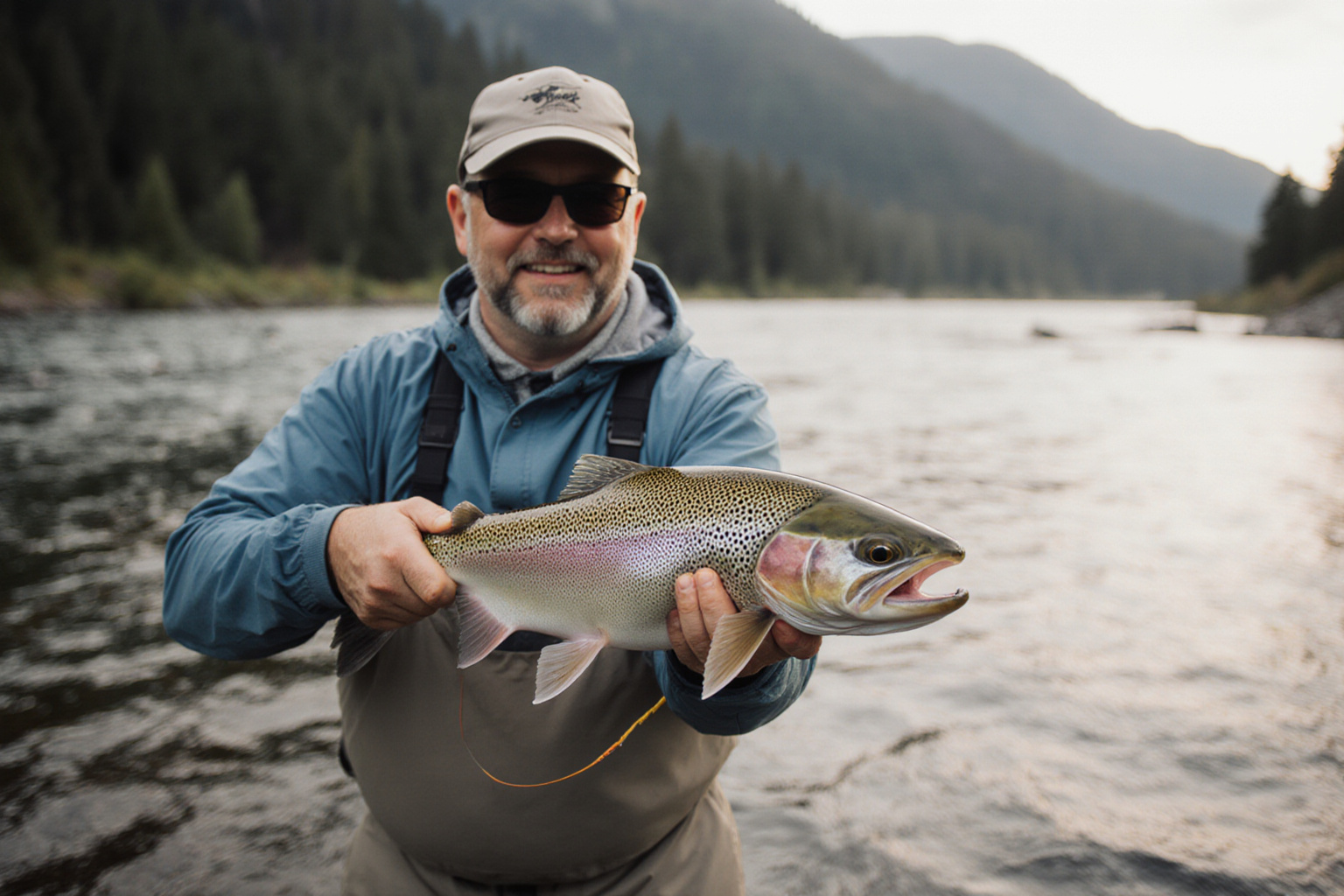
Two days is enough to see both rivers badly. Three days is enough to fish each one properly and keep a day in hand for the weather, which is the single most useful thing you can do with a spare day here. A week lets you add the upper McCloud above the reservoir, the small water on the Trinity Divide, and a day doing nothing at all, which the canyon deserves.
On timing, the seasonal table in the conditions section sets out what each part of the year usually looks like. The short answer is late June or October.
What the elevation does
Summer days in the canyon can reach the mid nineties Fahrenheit while the night drops to the forties. Spring and autumn bring genuine cold, and snow closes the higher roads well into spring. The rivers sit at the bottom of steep, north to south canyons, which means long morning shade and early evening shade: fishing light lasts longer at both ends of the day than the sunrise and sunset times suggest, and the water warms more slowly than the air.
The practical consequence is layers. A day that begins at four degrees Celsius and ends at thirty two is normal in June, and no single garment covers that.
Mount Shasta fly fishing gear checklist
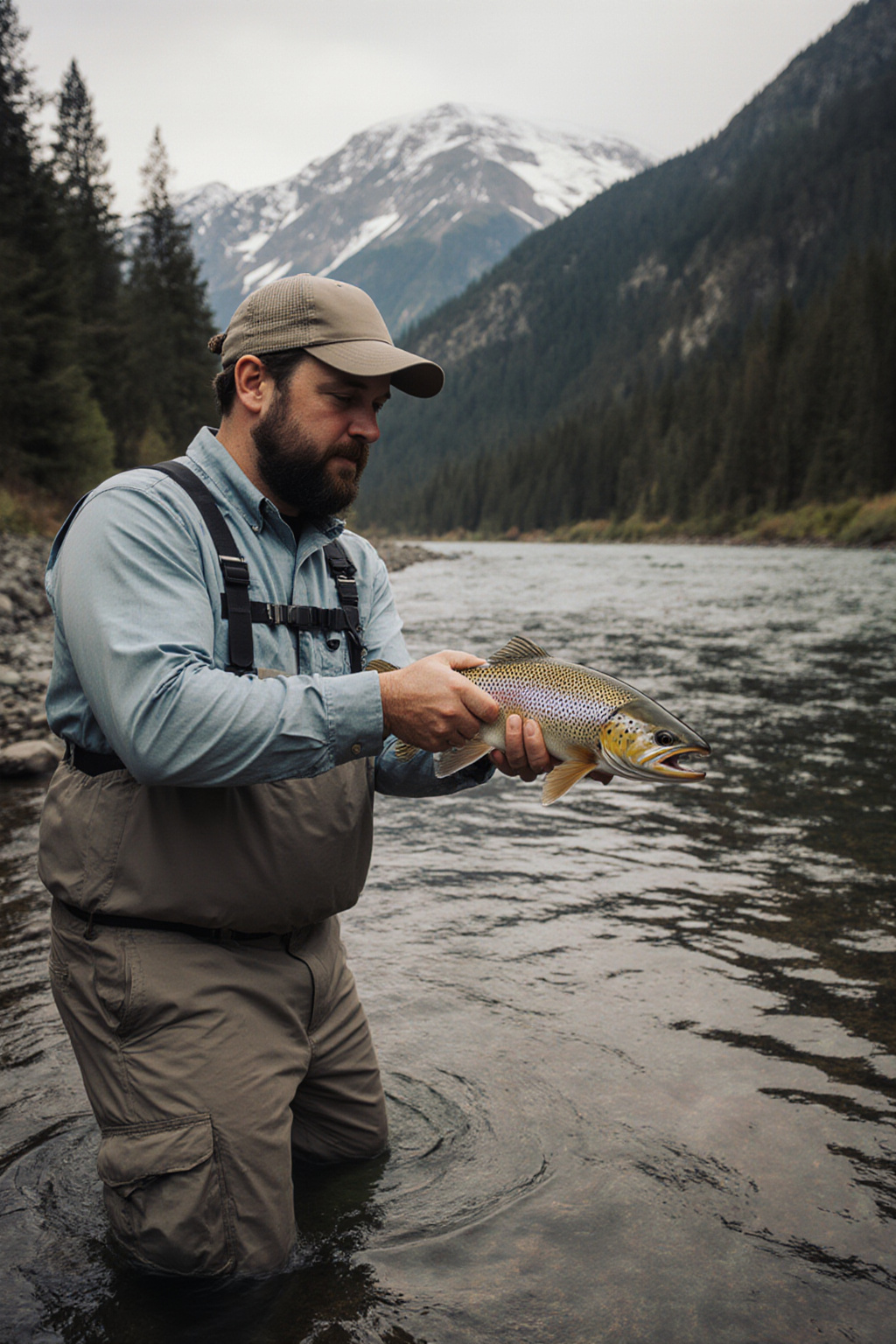
Nothing exotic, but a few items on this list are specific to steep, cold, slippery canyon rivers and are worth the space.
| Category | What to bring | Why it matters here |
|---|---|---|
| Rod | A 9 ft 5 weight for everything; add a 10 ft 3 or 4 weight if you tight line nymph, or a 7 ft 6 in 4 weight for brushy pockets | Short casts in tight cover, with enough backbone to control a fly in fast water |
| Line and leader | Floating line, 9 ft leaders in 4X and 5X, spools of 4X to 6X tippet | Fast water hides tippet diameter; go stronger than you would on a spring creek |
| Weight | Tungsten beadhead nymphs in several weights, plus non lead split shot | Depth is the variable that decides most days on both rivers |
| Boots | Studded soles, and a wading staff | Round algae covered rock and strong current, especially from July onward |
| Waders | Breathable waders spring and autumn, wet wading gear in high summer | The McCloud is cold in August even when the air is not |
| Clothing | Layers, a rain shell, a warm hat and a sun hat, in the same bag | Twenty degrees of swing in a day is normal at this elevation |
| Instruments | Stream thermometer, polarised glasses, headlamp | Temperature drives the fishing; the canyon goes dark before the sky does |
| Safety | Water, first aid, tick remover, a paper map | There is no mobile signal in the McCloud canyon and little in parts of the Sacramento canyon |
| Vehicle | Full tank, spare tyre in usable condition, something to sit on that you do not mind covering in dust | The road to the Lower McCloud is long, dusty gravel with no services |
The fly side of packing
Carry the four insect groups in three or four sizes each rather than fifty patterns. The hatches section explains the groups, and the starter box for the McCloud is the shortest usable list on this site.
Putting a weekend together
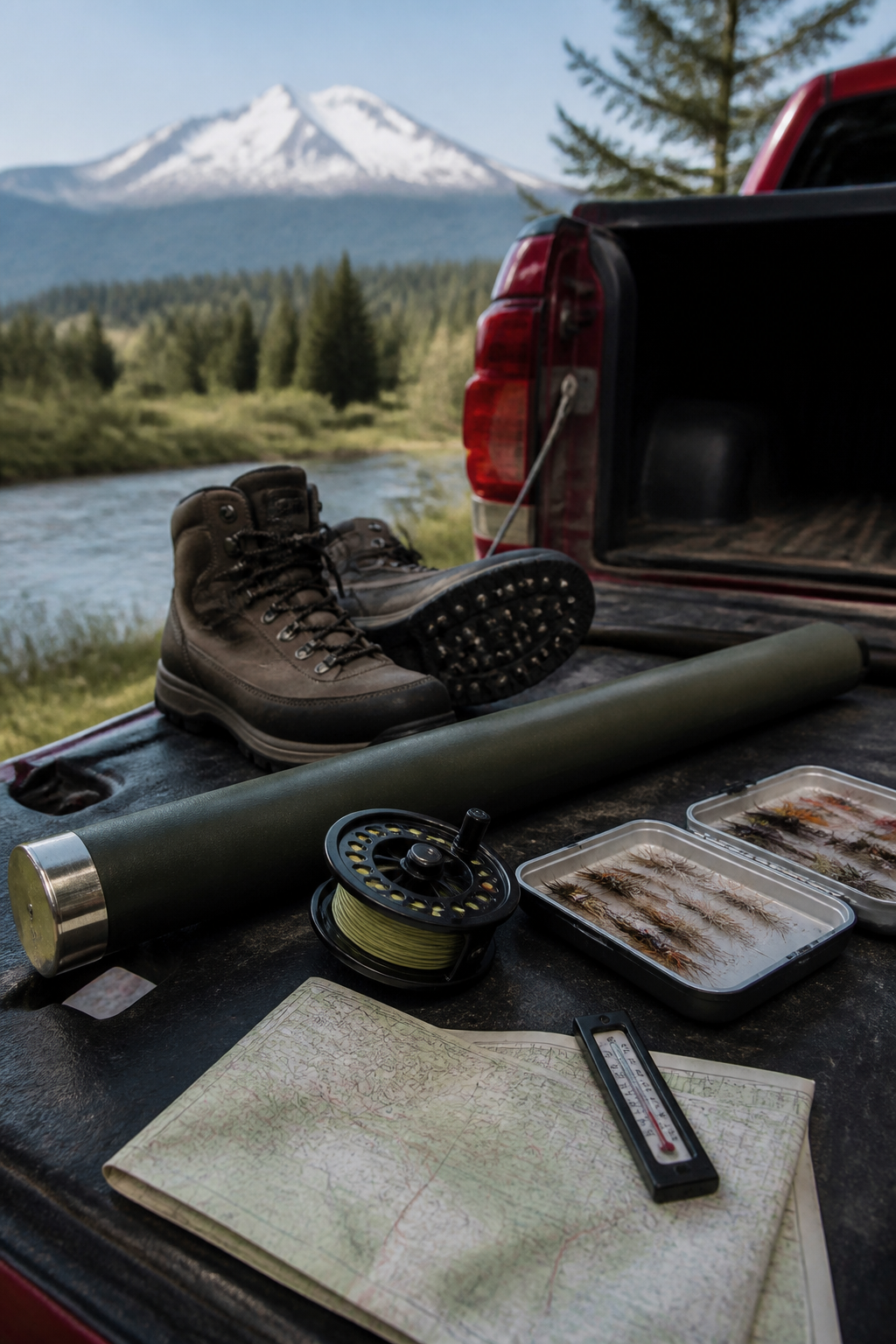
Two rivers forty minutes apart that fish nothing alike is a gift when the weather turns. The page on building your own two day or three day plan sets out two structures, the driving times between them, and what to do when one river blows out.
The page in this section
Itineraries
-
15/09/2026
Vinyl Arrow Wraps
A plain reading note on vinyl arrow wraps in the United States: cast and calendered film, applying and removing a wrap, and how added mass affects arrow flight.
-
15/09/2026
Small-room chamber music
A melodica player's kit, the acoustics of a low listening room, and how a twenty-minute chamber programme gets built and booked in Reykjavik.
-
07/07/2026
Building your own two day or three day plan
How to split a short trip between two very different rivers, with driving times and a fallback for bad water.