Gear and trip planning
Fishing the Loire in Touraine: reading the water
A practical look at fishing the Loire in Touraine: how depth decides the species, the lure and the lead, from the sand bank to the bridge pool.
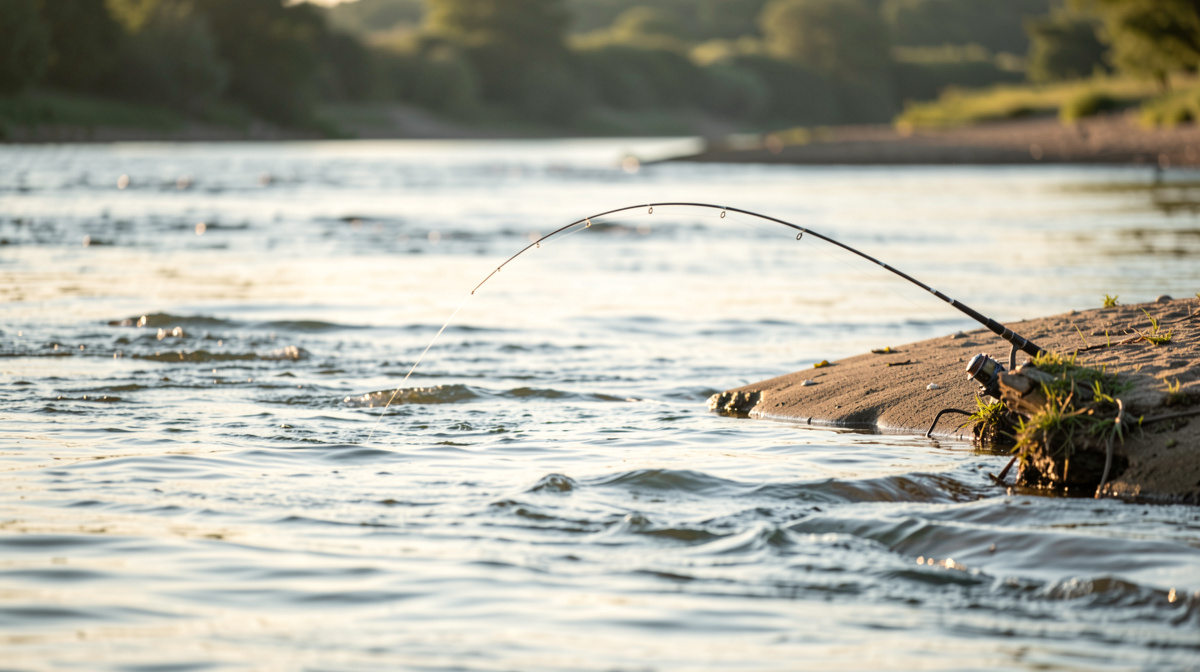
Fishing the Loire in Touraine comes down to reading depth before choosing anything else. The river is wide, shallow in places and deep in others, and each level of water holds a different fish and asks for a different approach. On the big predators of the river, catch and release is the default practice.
A magazine based in Indre-et-Loire covers this water and the fish of the Touraine basin, along with the techniques that take them and supervised learning for young anglers. Its pages describe a swim held in the current at first light, the rod bent downstream and a sand bank showing to the right. That image sums up the river: a moving edge, a rod under tension, and a bottom you can actually see.
Why does depth decide the whole session?
Three levels settle a fishing trip: the choice of lure comes down from the depth, never the other way round. An angler who picks a lure first and then looks for water to fish it in is working backwards on the Loire.
The river is read across its width, not along its length. A single stretch can hold an arm, an island and a channel side by side, and the height of the water decides the species, the lure and the lead. Shallow margins warm faster and hold cover. Mid-depth water carries food and moving fish. The deepest line, often along a bridge pool, holds the largest residents and demands weight to reach them.
This is why two anglers on the same bank can fish the same hour and catch nothing alike. One is casting into a metre of water, the other into six. The rigs have nothing in common.
What lives in less than a metre of water?
The sand bank and the weed beds form the shallowest level, under a metre deep. This is the level where an angler learns to read a take, because everything happens within sight. The float, the line and the fish are all in the same field of view.
Black bass hold their positions here. They sit against structure, along the edge of weed, behind a stone, under the lip of a sand bank cut by the current. A lure worked slowly along that edge gets a reaction. Speed matters less than angle: a bait coming down the current and across the fish triggers more takes than one retrieved straight back.
Shallow water is also the best place to start a young angler. The cast is short, the bite is visible, and the lesson is immediate. A take that can be seen teaches more in an hour than a full day of guessing at deep water.
How does a take show at the surface?
Mid-depth water is where a take can be read at the surface. The float and the swirl tell what the fish is doing before the rod answers. A float that dips once and holds is not the same as one that runs sideways, and the difference decides the strike.
This level sits between the shallow margin and the deep channel. It carries current, food and fish moving between the two extremes. A bait presented here drifts with the flow and covers water rather than a single spot.
Reading the swirl is a skill built over seasons. A fish that turns on a bait shows a different disturbance from one that takes it cleanly. Watching the surface before striking avoids the two most common mistakes on this water: striking too early and striking at nothing.
What holds in the current line and the deep pool?
The current line and its big residents are the third level. Two rods on the same swim is a normal setup here, one for bottom carp and one for the catfish that holds the pool.
The current line is not a single thread. It is a band of faster water with seams on both sides, and fish sit on the seams rather than in the fastest part. Weight has to reach the bottom without dragging the bait out of position. That is a question of lead, not of casting distance.
Catfish in a deep pool are a patient target. They hold structure on the bottom and move little. A bait placed on the right line and left alone does more than a bait cast repeatedly. Bottom carp follow similar rules, working the same deep water on a different rhythm.
Where does the river start and where does it end?
The Loire is the longest river in France, and its character changes completely between its source and its estuary. The section through Touraine is wide, braided in places, and shallow enough over large areas to wade. That width is what makes reading the water so important: the fish are not evenly spread, and most of the surface holds nothing.
Indre-et-Loire sits in the middle course, where the river carries a mixed population. Predators, cyprinids and bottom feeders share the same stretch at different depths and different hours. Early morning is the most reliable window, when the current is quiet and fish are active near the edges.
What should an angler check before going?
Rules on French inland water are set at national level and applied locally, and they change. Before any session on the Loire, an angler should check the current regulations for the department, including closed seasons, size limits and any local restrictions on the stretch being fished.
Access is the second thing to check. Not every bank is open, and some paths cross private land. A look at a map and a local enquiry saves a wasted morning.
Water level is the third. The Loire can rise quickly, and a stretch that is wadeable at one level is dangerous at another. A gauge reading before leaving home is part of the preparation, not an optional extra.
How do you teach a beginner on this river?
The shallow level is the classroom. Supervised learning for young anglers works best where the water is under a metre deep, the cast is short and the result is visible. A float rig, a small hook and a bait that stays on are enough.
The first lesson is not casting. It is looking at the water and saying where the fish are likely to be. An angler who can point to a seam, a weed edge and a drop-off has already learned the most useful skill on the Loire. The rest is repetition.
Catch and release is the default for the big predators of the river, and it is the simplest rule to pass on. A fish returned quickly and handled with wet hands swims away, and the next angler on that bank finds the same water worth fishing.
A river read in three levels
The Loire in Touraine rewards patience and observation more than equipment. Depth decides the species, the lure and the lead. The sand bank teaches the take, mid-water shows it at the surface, and the deep line holds the fish that need weight and time. An angler who reads the river across its width before the first cast is already fishing the right level.